Midcentury Style And Mountain Views In Vista Las Palmas
July 9, 2026
July 9, 2026
Have you ever seen a neighborhood where the architecture feels inseparable from the landscape? In Vista Las Palmas, that connection is the whole story. If you are drawn to Palm Springs for midcentury design, indoor-outdoor living, and dramatic mountain views, this neighborhood offers one of the clearest expressions of that lifestyle. Let’s dive in.
Vista Las Palmas is a recognized Palm Springs neighborhood at the base of the San Jacinto Mountains, on the western edge of the Coachella Valley in central Riverside County. The City of Palm Springs includes it among its neighborhood organizations and maintains blade signs there, which reflects its established local identity.
That setting matters. In Palm Springs, design and scenery are closely linked, and city planning policies emphasize preserving neighborhood character, modern design identity, and mountain views. In Vista Las Palmas, you can feel those ideas play out from one street to the next.
Palm Springs is widely known for Mid-Century Modern architecture, and Vista Las Palmas sits near the center of that story. Rather than feeling like a collection of ordinary houses, the neighborhood reads as a design district where rooflines, materials, and sightlines all work together.
For buyers who care about architecture, this is a place where the visual details are not accidental. The homes were shaped by the desert setting, the light, and the mountain backdrop, which gives the neighborhood a strong sense of place that still feels current.
According to the City of Palm Springs, George and Robert Alexander elevated tract housing here in the late 1950s by commissioning modernist architects for homes with soaring rooflines, minimalist facades, post-and-beam construction, and walls of glass. These were not cookie-cutter homes in the usual sense.
Instead, the neighborhood gained a custom feel through varied roof forms, facade treatments, and site orientation. That mix helped create a streetscape that feels cohesive without feeling repetitive, which is part of why Vista Las Palmas continues to attract design-focused attention.
The Palm Springs Historical Society highlights Vista Las Palmas for its mix of Alexander homes, Palmer and Krisel butterfly roofs, and Charles Du Bois Swiss Miss houses. That architectural range gives the neighborhood depth while still holding together as a recognizable Palm Springs environment.
Visit Palm Springs also notes that Palmer and Krisel, working with Alexander Construction Company, translated modernist ideas into entire neighborhoods. Du Bois added his own dramatic rooflines, post-and-beam character, and indoor-outdoor flow, expanding the design vocabulary without losing the desert-modern spirit.
In Vista Las Palmas, the mountains do more than frame the background. They act as an active design element. Palm Springs planning language repeatedly treats mountain views and responsiveness to the desert environment as central values, and this neighborhood reflects that clearly.
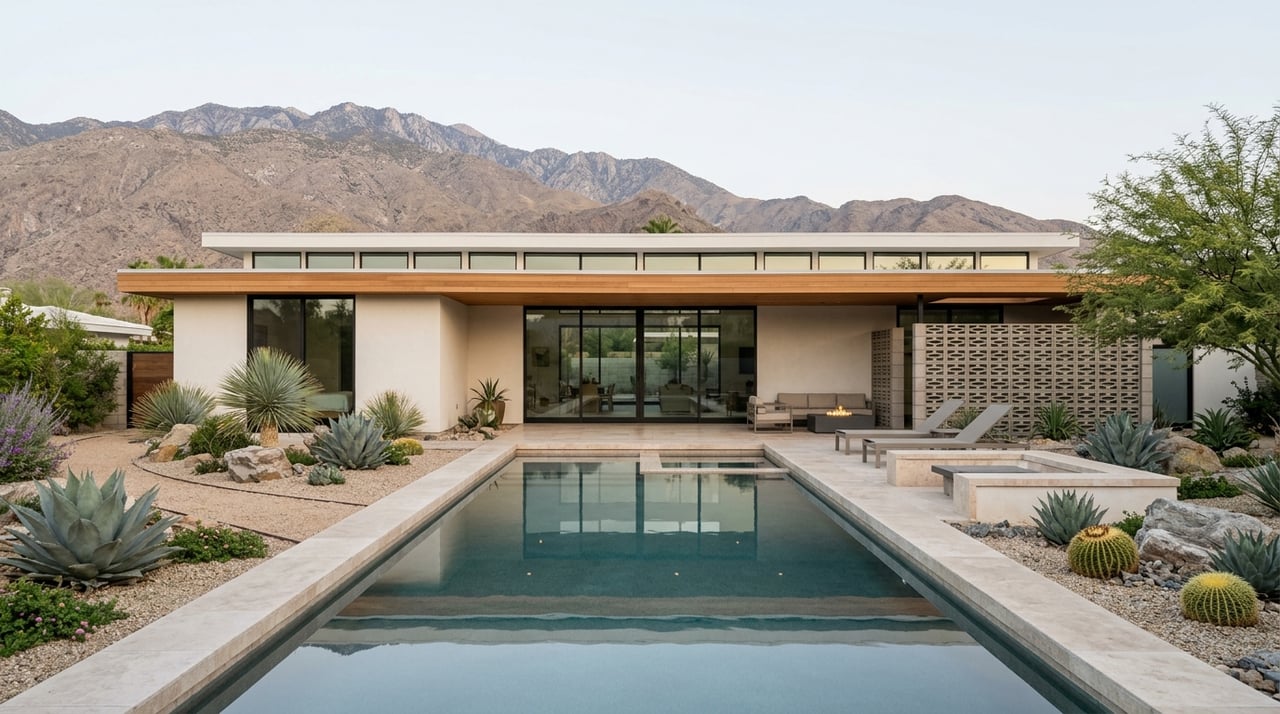
When you stand on a patio, look through a glass-walled living room, or take in a pool area against the San Jacinto Mountains, the visual relationship between house and landscape becomes obvious. The architecture opens itself toward light, sky, and view corridors in a way that feels intentional.
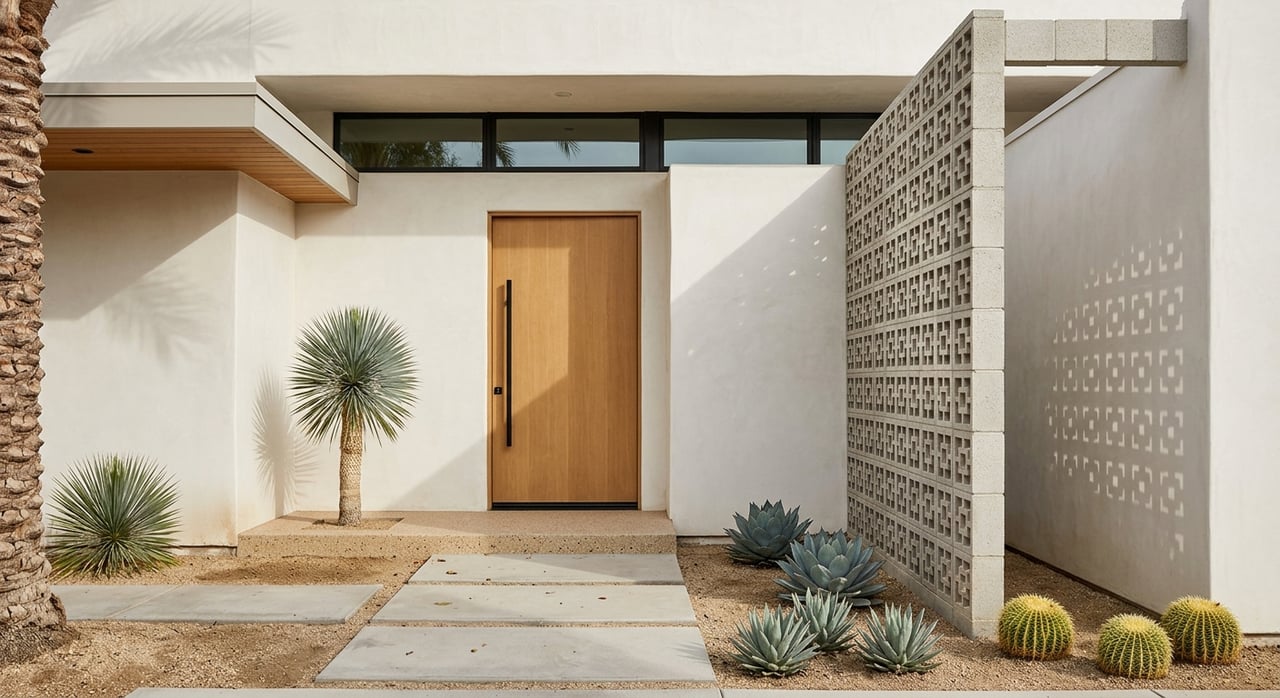
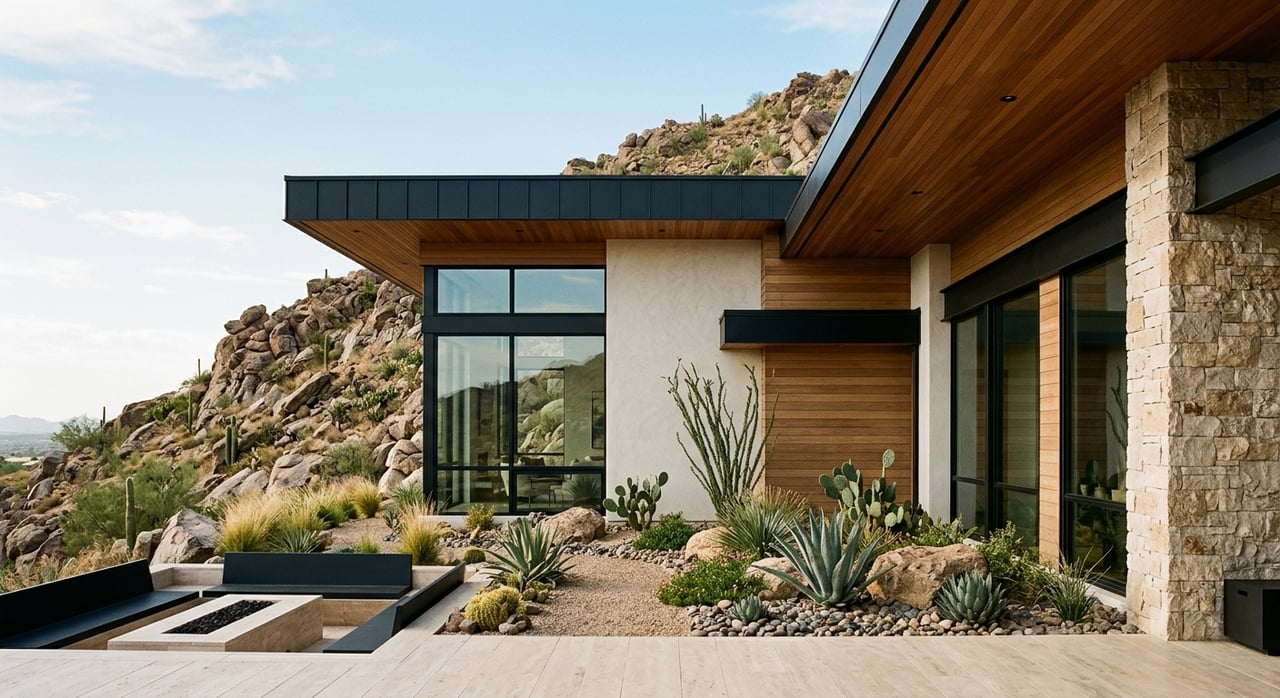
Much of Vista Las Palmas can be understood in a single image: a low-slung or sharply angled roofline, walls of glass, a patio or pool, desert plantings, and mountains rising behind it all. Visit Palm Springs points to the same visual language when describing butterfly rooflines, breeze block walls, and glass-walled living rooms in neighborhoods like this one.
That is one reason the neighborhood has lasting appeal for style-conscious buyers. The homes are not just visually distinctive on their own. They are designed to interact with sun, shadows, open air, and the desert setting.
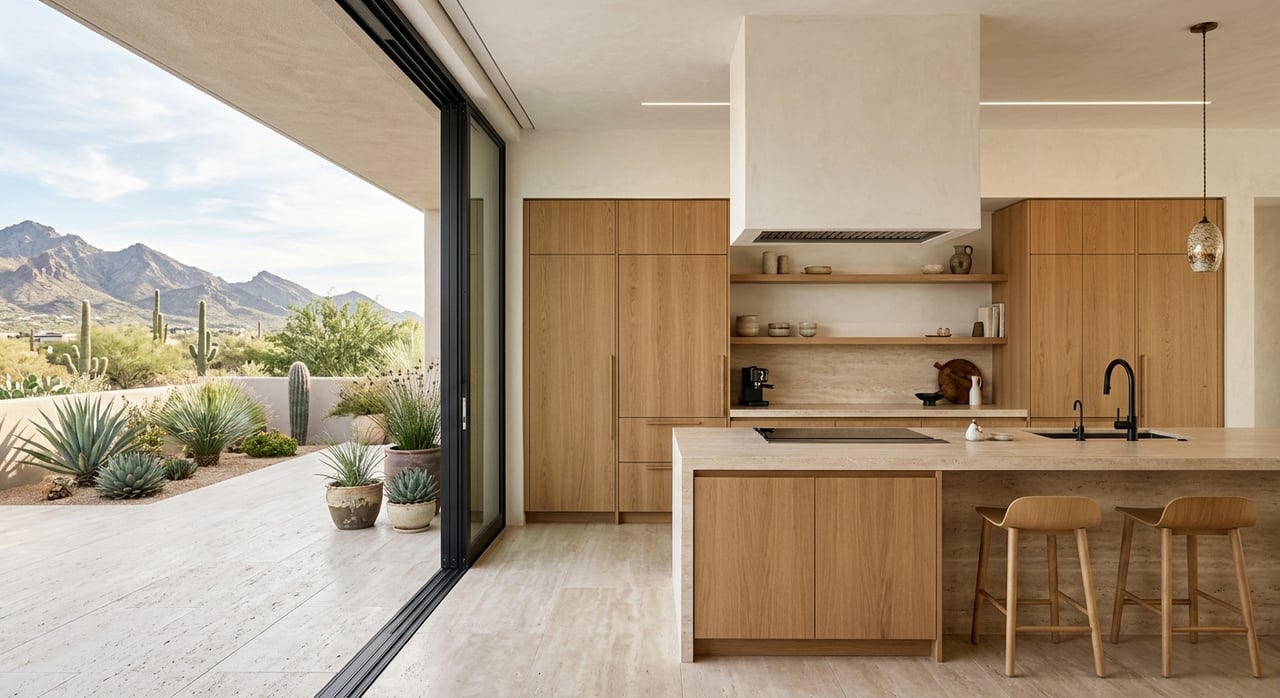
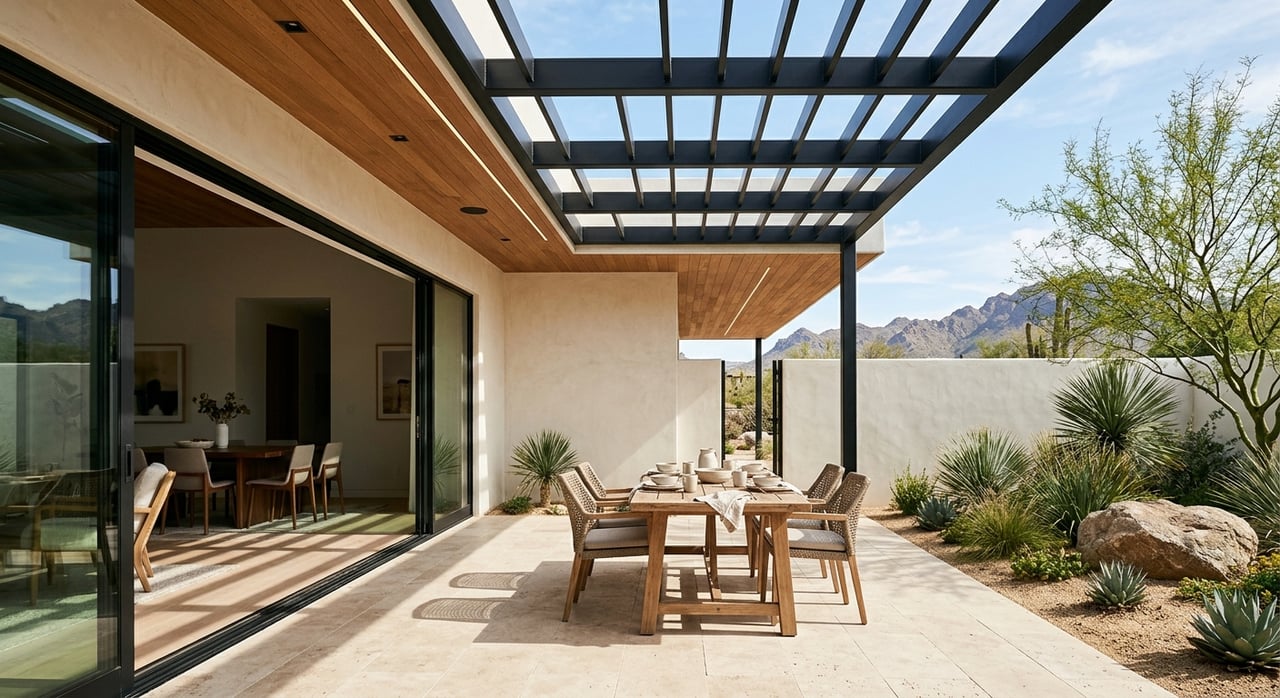
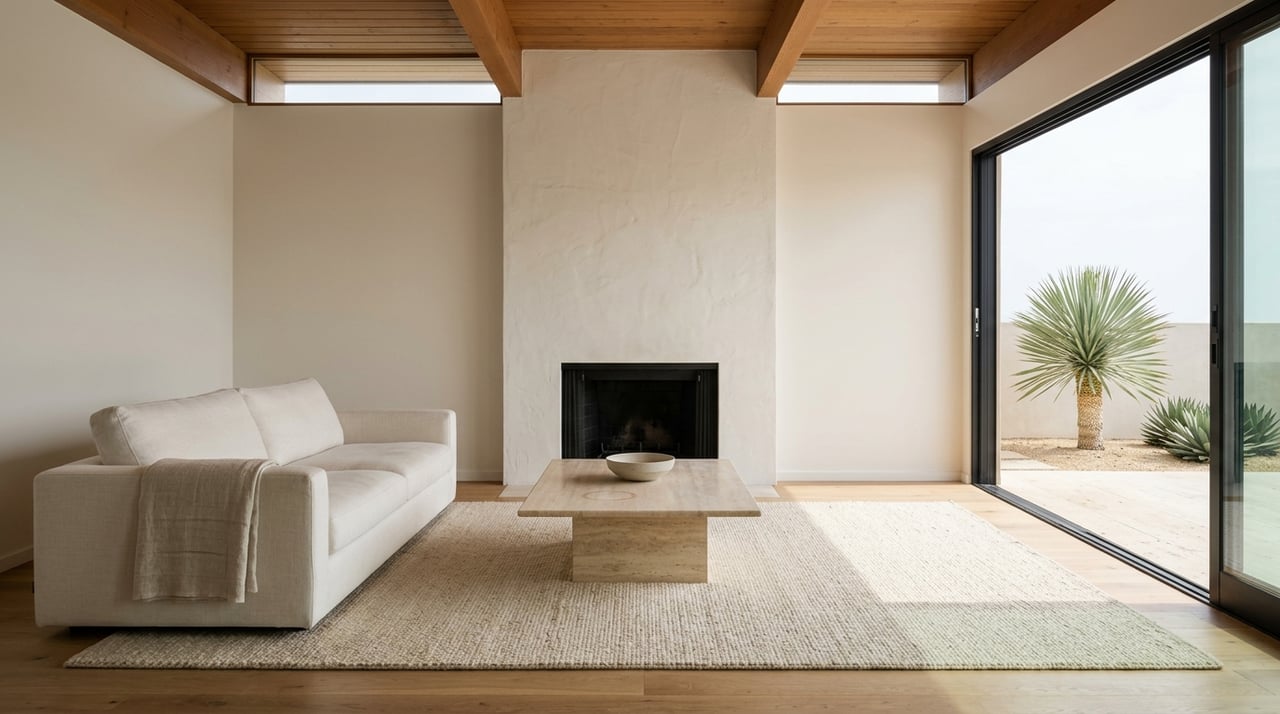
Indoor-outdoor living is a familiar Palm Springs phrase, but in Vista Las Palmas it feels especially tangible. Post-and-beam construction, expansive glazing, patios, and open layouts support easy movement between interior spaces and the outdoors.
This is not only about style. It also shapes how a home lives day to day. Whether you are looking for a primary residence, second home, or investment property, the neighborhood’s design language supports a relaxed but polished desert lifestyle.
Although Vista Las Palmas is strongly associated with midcentury architecture, it does not present a single repetitive look. Du Bois Swiss Miss homes, for example, introduce low-lying forms, dramatic A-frame entries, and covered porch areas.
That variety matters if you are comparing homes with an eye for both character and long-term appeal. You may find butterfly roofs, minimalist facades, dramatic roof profiles, or homes that use similar materials in different ways, all within a cohesive neighborhood setting.
Vista Las Palmas is not just a residential area. It is part of the larger Palm Springs design story. Visit Palm Springs describes the city as a midcentury modern destination, and the Palm Springs Historical Society includes Vista Las Palmas on its walking tour roster.
The neighborhood also sits within a broader architecture tourism culture that includes Modernism Week, which the tourism office says brings thousands of design lovers to the city each February. In practical terms, Vista Las Palmas has become a shorthand for Palm Springs modernism.
The neighborhood’s cultural profile also connects to well-known Palm Springs stories. The City of Palm Springs notes that the Alexanders lived in Vista Las Palmas and that their custom home at 1350 Ladera, the House of Tomorrow, later became known as Elvis and Priscilla Presley’s honeymoon hideaway.
That kind of history adds another layer to the neighborhood’s identity. For many buyers and sellers, Vista Las Palmas is compelling because it blends real architectural significance with a recognizable place in Palm Springs culture.
If you are considering Vista Las Palmas, the appeal often comes down to a few key qualities:
For design-conscious buyers, that combination can be hard to replicate. The neighborhood offers not just a home, but a strong sense of setting and architectural intent.
For sellers, Vista Las Palmas offers more than a location pin. It offers a narrative. Buyers are often responding to the architecture, the neighborhood’s place in Palm Springs history, and the way the homes engage with the mountains and desert light.
That means presentation matters. A design-aware marketing approach can help highlight the features that make a property resonate, from rooflines and facade details to pool views, glass walls, and indoor-outdoor flow.
Vista Las Palmas stands out because it delivers a specific Palm Springs experience with unusual clarity. It brings together recognized neighborhood identity, notable midcentury architecture, mountain-driven scenery, and a strong indoor-outdoor lifestyle.
If you are buying or selling in a neighborhood where architecture is part of the value, local guidance matters. For tailored insight on Vista Las Palmas and Palm Springs design-forward homes, connect with Kyle Gilligan.
Stay up to date on the latest real estate trends.
We pride ourselves in providing personalized solutions that bring our clients closer to their dream properties and enhance their long-term wealth.